


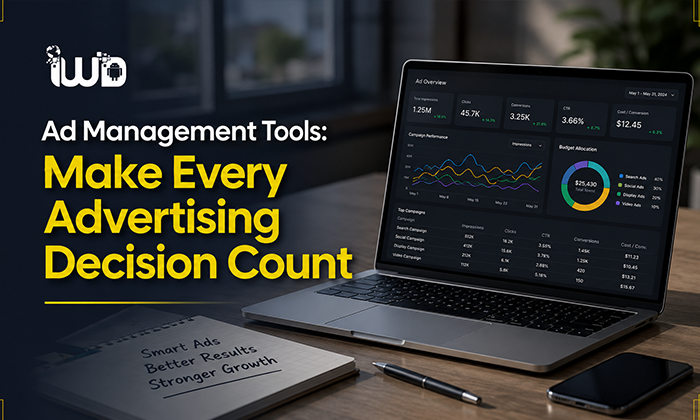
Advertising performance goes beyond clicks and campaign budgets. The real value lies in reaching potential customers who are genuinely interested in your offerings and turning that interest into measurable business results. With proper tracking and performance analysis, businesses can identify which advertising efforts are delivering value and which areas need improvement.
With the right advertising tools, businesses can assess campaign effectiveness, uncover areas of unnecessary expenditure, and identify opportunities to improve their overall marketing performance. From monitoring paid search campaigns to analysing website visitors, these tools provide the information needed to improve advertising strategies over time.
For businesses that need professional campaign support, Google Ads services from IWD Technologies can help align advertising activities with specific marketing objectives.
Page Contents
How Effective Ad Management Supports Business Growth
Managing advertising across multiple platforms can quickly become complicated. Each advertising platform presents its own performance data, measurement tools, and insights into how audiences interact with campaigns. Reviewing these separately may leave important gaps in your understanding of the customer journey.
A well-organised advertising system helps you connect campaign spending with website activity and customer actions. Instead of focusing only on impressions or clicks, you can investigate which campaigns generate enquiries, which advertisements attract relevant visitors, and where improvements may be needed.
This approach is particularly valuable for small businesses and growing companies that need to make careful decisions about their marketing budgets.
1. Google Ads: Connect With People Searching for Your Services
Google Ads gives businesses an opportunity to reach potential customers when they search for relevant products or services. It can support lead generation, online sales, local visibility, and other advertising objectives.
Advertisers can use the platform’s reporting features to evaluate keyword effectiveness, review search queries, monitor visitor actions, and track campaign expenditure. These findings help refine targeting, filter out irrelevant traffic, and allocate budgets towards searches with greater potential to generate valuable leads or sales.
For instance, a web development business might attract visitors looking for DIY website tools instead of paid development solutions. Reviewing search query data and refining keyword choices helps focus ad spend on people more likely to need professional services.
Campaign performance should also be evaluated against business goals. A lower cost per click is not necessarily better if those clicks rarely lead to enquiries or purchases.
2. Meta Ads Manager: Make Social Advertising More Effective
Brands can attract potential customers through channels beyond search engines. Facebook and Instagram provide opportunities to introduce products, promote services, and reconnect with people who have previously interacted with a brand.
Meta Ads Manager helps advertisers organise campaigns, test different creative approaches, select audiences, and monitor results. Comparing advertisements can reveal which messages and visuals encourage meaningful engagement.
For instance, an online retailer could test product-focused images against lifestyle creatives to determine which approach generates more purchases. Service providers can compare different promotional offers to find which ones bring in more promising prospects.
With expert social media marketing services, businesses can refine their advertising efforts, keep brand messaging aligned across platforms, and develop meaningful relationships with potential customers.
3. Google Analytics 4: Understand What Happens After an Ad Click
Website traffic alone does not indicate campaign success; visitors must also take actions that support your business goals.
Google Analytics 4 (GA4) provides insights into how users navigate a website, interact with its content, arrive from different channels, and complete configured conversion actions. These insights can help explain what visitors do after arriving from an advertising campaign.
Suppose an advertisement attracts considerable traffic, but very few visitors complete an enquiry form. Reviewing website behaviour can help identify pages that need improvement or parts of the customer journey that require closer attention.
GA4 becomes more useful when its reports are connected to clear business objectives. Monitoring key customer actions helps businesses determine whether their advertising efforts are producing tangible results.
4. Google Tag Manager: Improve the Accuracy of Your Tracking
Reliable advertising decisions depend on collecting the right information. Google Tag Manager makes tracking implementation easier by letting marketers manage tags and adjust data collection settings without repeatedly editing the website’s underlying code.
Depending on your website, tracking can be configured for actions such as completed contact forms, telephone link clicks, purchases, and registrations.
These events provide more useful information than traffic figures alone because they indicate how visitors interact with your business.
However, tracking must be tested regularly. Incorrect configurations, duplicate events, or missing tags can produce misleading reports. Testing tracking configurations before launching ads and following website changes helps keep campaign data accurate and reliable.
5. Looker Studio: Simplify Cross-Platform Campaign Reporting
When advertising information is scattered across different platforms, comparing campaign performance can take valuable time. Looker Studio presents advertising insights through visual reports, allowing marketing teams to compare campaign metrics and spot performance trends with less manual effort.
A practical dashboard might display campaign expenditure, recorded leads, conversion rates, and cost per acquisition. These figures help marketers compare results and identify areas that may deserve further investigation.
The goal is not to include every available metric. Instead, focus on the information that helps answer important business questions and supports better decisions.
A well-structured reporting system helps marketing teams and agencies present campaign results clearly to clients, managers, and decision-makers.
How to Develop a More Efficient Advertising Workflow
Selecting the right tools is only the beginning. Their value depends on how well they support your advertising strategy.
Use the following steps to streamline your advertising workflow:
- Define your objectives: Decide whether you want more qualified leads, online purchases, phone enquiries, or another measurable outcome.
- Configure tracking: Set up analytics and conversion measurement before relying on campaign reports.
- Choose suitable platforms: Select advertising channels based on your audience, offer, and budget.
- Review performance consistently: Compare results over appropriate periods rather than reacting to every short-term change.
- Improve the customer experience: Use campaign data to refine ad content, target relevant audiences, enhance landing pages, and make conversion steps clearer.
This method turns advertising insights into practical changes that can strengthen campaign effectiveness and support better marketing decisions.
Your Website Can Influence Advertising Performance
Even a well-targeted campaign can struggle if the website experience does not meet visitors’ expectations. Slow-loading pages, confusing navigation, unclear offers, and complicated enquiry forms can discourage potential customers from taking the next step.
Your landing page should deliver on the promise made in the advertisement. Your website should clearly communicate your offering, highlight its value, and guide visitors towards the next step.
Businesses facing these issues can explore IWD Technologies’ web development services to improve website functionality, mobile compatibility, and design elements that encourage visitors to take action.
An optimised website can strengthen campaign performance by guiding interested visitors towards enquiries, purchases, and other valuable actions.
When Should You Review Your Advertising Strategy?
Consider reviewing your current setup if your campaigns generate clicks but few enquiries, advertising costs continue to rise, or your reports cannot clearly explain which activities deliver value.
Inconsistent conversion data and difficulty comparing different advertising channels are also signs that your measurement process may need attention.
Effective digital marketing services align campaign strategy, performance tracking, website usability, and continuous improvements to create a more consistent marketing approach.
The goal is to maximise advertising effectiveness rather than increase spending just to gain greater exposure. It is to understand what works, address weaknesses, and allocate your budget according to meaningful results.
Frequently Asked Questions
1. What are ad management tools used for?
Ad management tools help businesses organise advertising campaigns, monitor spending, evaluate performance, track conversions, and identify opportunities to improve their marketing efforts.
2. What ad management tools are best for small businesses?
Start with the advertising platform most relevant to your audience, such as Google Ads or Meta Ads Manager. Use GA4 to analyse website activity and Google Tag Manager to configure and maintain conversion tracking.
3. What causes differences in conversion figures across advertising platforms?
Advertising platforms and analytics tools may use different attribution models, reporting periods, and counting methods. Review the tracking settings and compare matching conversion events before determining whether a measurement issue exists.
4. How can I tell whether my advertising budget is being used effectively?
Evaluate meaningful outcomes such as qualified enquiries, completed purchases, cost per acquisition, and revenue where available. Consider lead quality and profitability rather than judging performance through clicks alone.
5. Can ad management tools optimise campaign performance on their own?
Tools can provide useful data and automation features, but they cannot guarantee better results. Effective performance also depends on targeting, creative quality, conversion tracking, website experience, and informed optimisation.
Make Every Advertising Decision Count
Better advertising results begin with understanding how your campaigns contribute to your business objectives. Integrating suitable ad platforms with accurate tracking, clear analytics, and an effective website helps businesses allocate their marketing budgets more strategically.
Ready to improve your advertising strategy? Contact IWD Technologies to discuss your campaign goals and explore a more structured approach to managing and measuring your online advertising.