


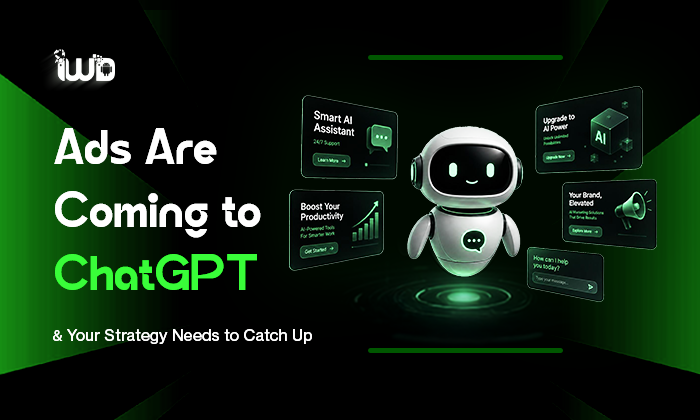
For years, marketers have treated ChatGPT as a productivity tool, something for brainstorming headlines or drafting emails. That era is ending. With ChatGPT ads entering the picture, one of the world’s most-used chatbots is becoming a place where brands can pay to be seen.
If your digital marketing strategy revolves around Google, Meta, and a few social platforms, it’s time for a fresh look. Here’s what this shift means and how to respond without panic.
Page Contents
Why This Shift Matters
Millions of people already use ChatGPT to research products, compare services, and make decisions. Unlike a social feed, where people scroll passively, users arrive with a question and clear intent. That’s the kind of moment advertisers have always paid a premium to reach.
The format changes too. Instead of a banner or a list of links, a brand message appears inside a dialogue. This is conversational advertising: a sponsored suggestion sitting next to a personalized, natural-language answer. Done well, it feels helpful. Done poorly, users will notice immediately.
How It Compares to Traditional Paid Channels
Many businesses will ask how this stacks up against Google Ads. It’s too early to declare a winner, because the two serve different moments. Someone searching for “buy running shoes” is already close to making a purchase. Someone asking a chatbot “how do I start running?” is still comparing options, and the right message at the right moment can influence their final choice.
For now, treat this as an addition to your mix, not a replacement for your search campaigns. They still deliver proven results. Protect that foundation while setting aside a small test budget for the new channel.
Trust Will Make or Break Performance
Users turn to chatbots because they want honest, helpful answers. If sponsored content feels pushy or blurs the line with genuine recommendations, trust erodes fast. Expect transparency about what is and isn’t an ad to become a major factor.
For brands, this means leading with value. Messages that educate before they sell will earn more attention than those that simply shout.
What This Means for Organic Visibility
Even without paying, your brand can appear in AI-generated answers, which makes SEO a different game than it was five years ago. This is where generative engine optimization (GEO) comes in: shaping your content so AI systems can understand, trust, and reference it. Think of it as writing for two audiences at once: the person reading and the AI summarizing.
Beyond strong fundamentals, you now need:
- Clear, direct answers to common customer questions
- Well-organized pages with helpful headings and FAQs
- Consistent brand details across your website and online profiles
- Original expertise and examples that AI tools can’t simply copy
Paid and organic visibility will soon work side by side, and brands investing in both will have a real advantage.
Five Ways to Prepare
1. Audit your current channels. Know where your leads come from today and which channels are rising, flat, or declining. That baseline helps you judge whether a new platform is worth the spend.
2. Start small and test. Treat early experiments as exactly that, with a limited budget, clear goals, and tracked results. A few weeks of real data will teach you more than any prediction.
3. Refresh your website. Ad traffic only helps if your site converts it. A slow or outdated site wastes every click, so fast load times, mobile-friendly design, and clear calls to action matter more than ever.
4. Write for answers, not just keywords. People interact with chatbots using natural, conversational language. Content that answers those natural questions is a stronger candidate for AI search optimization.
5. Stay flexible. Formats and policies on new platforms change quickly, so build a paid advertising strategy that you review often, not once a year.
A Word for Smaller Brands
A new ad platform isn’t just for big companies. Early adopters often enjoy lower competition and costs before the market gets crowded. A small business that experiments thoughtfully now could build an edge that’s harder to earn later. Just don’t skip the basics: a strong website, solid content, and a clear picture of your customer.
Time to Make Your Move
The arrival of AI advertising signals that chatbots are moving from experiment to mainstream marketing channel. The brands that thrive won’t be the fastest to react, but the smartest. Review your channels, test carefully, and keep investing in content and website quality.
Need help adapting to the AI era? A skilled digital marketing agency can balance search, paid campaigns, and emerging platforms so you stay visible wherever your customers search, ask, and scroll.
Let’s talk about your marketing plan. Get in touch with IWD Technologies and take the first step toward staying ahead of the curve.